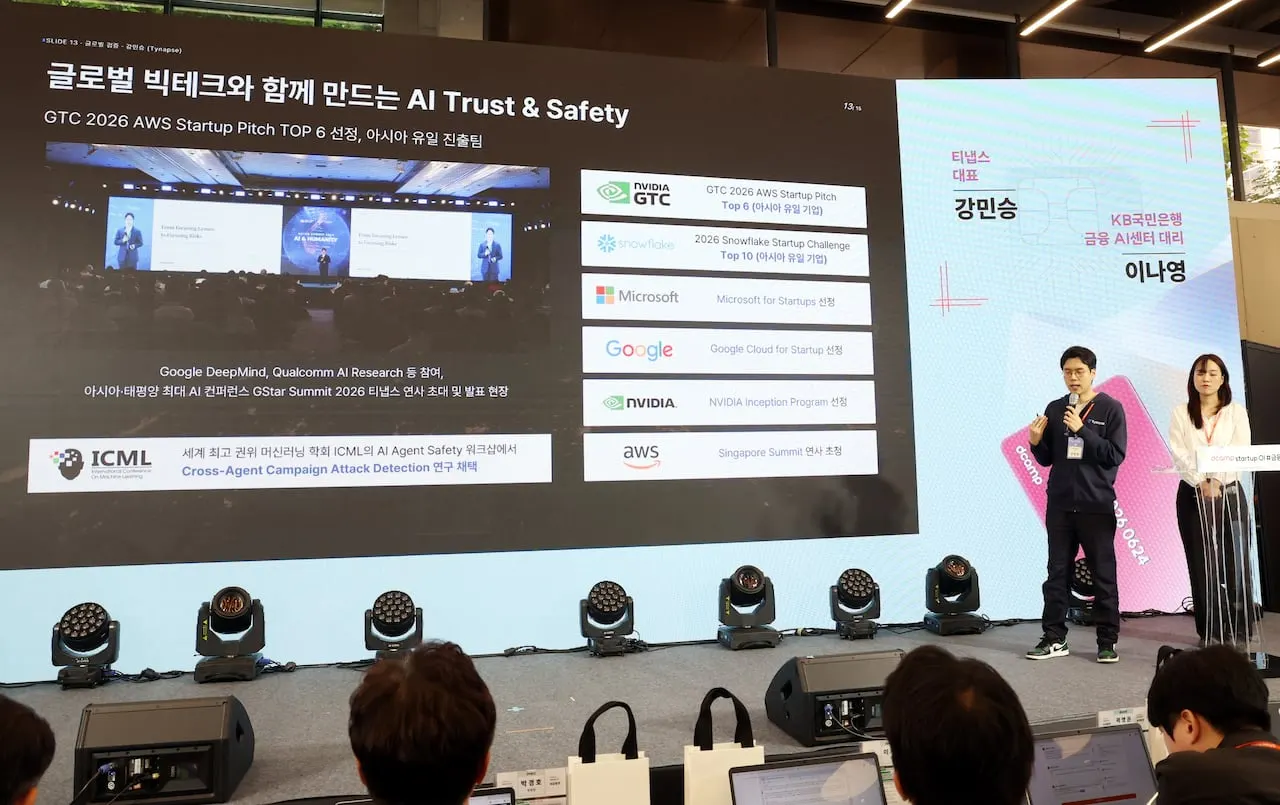
FSC Chairman's Award at Startup OI #Finance, with KB Kookmin Bank.
Top prize · hosted by D.CAMP & Korea Fintech Center


A refund denial is sent and the dashboard looks normal, yet the company's refund policy has not been correctly applied to the customer. As companies automate more judgments with tools like TypeSafe's Jev, they also have more decisions to validate and manage. This article examines how errors can accumulate while operational metrics look normal, and why companies need to extend governance beyond model inventories to individual decisions and actions.
Mashup Ventures hosted Mashup Atoms Day. Tynapse shared how bottlenecks in AI adoption are shifting toward reliability and security. It also outlined the resulting changes in the market. Tynapse provides Decision Trust Infrastructure that judges in real time whether deployed AI acts within company policy and blocks risks. The company is gaining attention in finance, manufacturing and telecom.
Tynapse was named a top 10 finalist at the NVIDIA Inception Grand Challenge 2026 Asia-Pacific final in Singapore—the only finalist that's just over a year old, with its AI decision-control technology already proven in the financial sector. Competing against roughly 10,000 regional startups, Tynapse presented its “decision trust infrastructure,” a verification layer built on NVIDIA Hopper GPUs, TensorRT-LLM, and FP8 inference that checks an AI agent’s reasoning against company policy and risk before it acts.
The Chosun Ilbo covered the fast-growing AI security/guardrail market. Tynapse CEO Min-seung Kang said, “Guardrail AI intentionally lowers creativity to make its judgments more consistent.” As AI grows smarter it becomes easier for it to slip out of control, the piece explains—so guardrail AI specializes purely in oversight, deliberately trading away creativity.
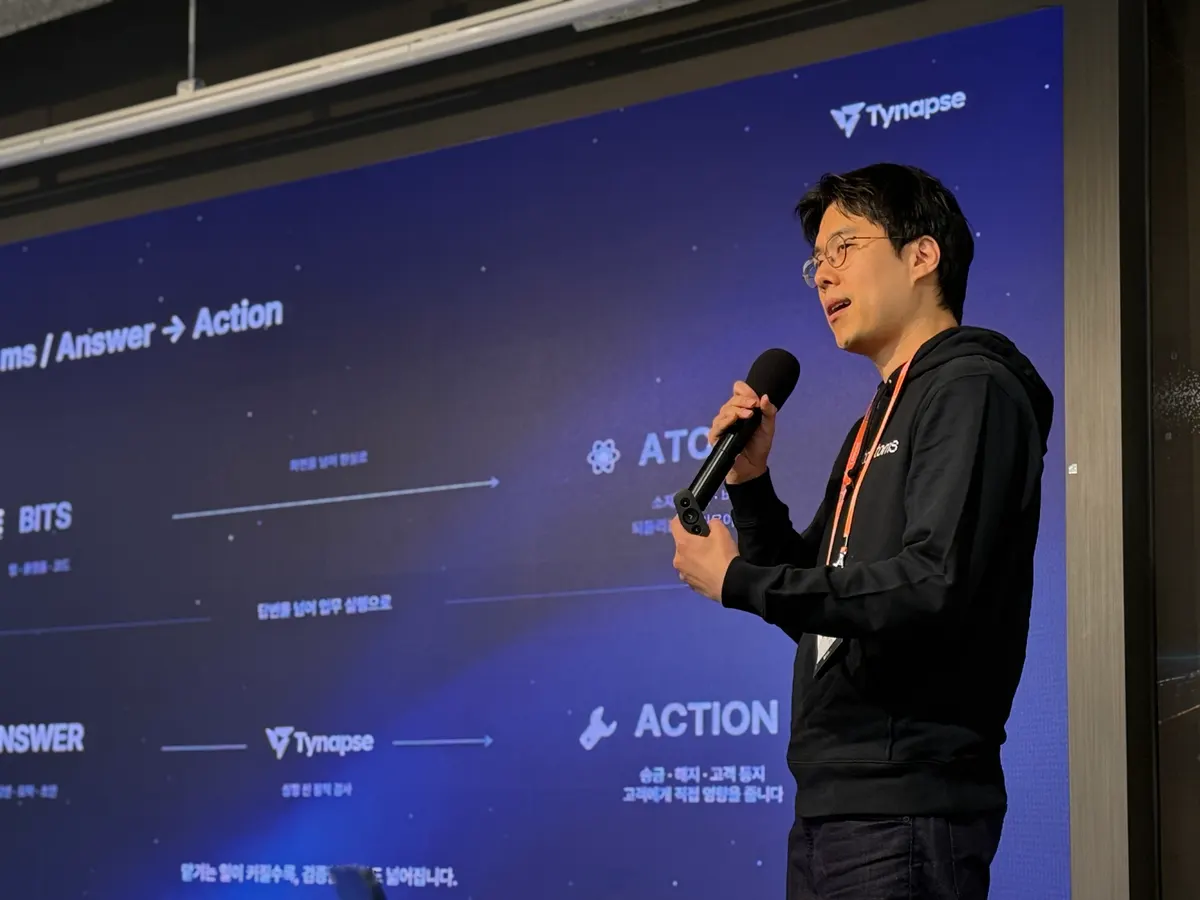
Mashup Ventures hosted Mashup Atoms Day. Tynapse shared how bottlenecks in AI adoption are shifting toward reliability and security. It also outlined the resulting changes in the market. Tynapse provides Decision Trust Infrastructure that judges in real time whether deployed AI acts within company policy and blocks risks. The company is gaining attention in finance, manufacturing and telecom.
A refund denial is sent and the dashboard looks normal, yet the company's refund policy has not been correctly applied to the customer. As companies automate more judgments with tools like TypeSafe's Jev, they also have more decisions to validate and manage. This article examines how errors can accumulate while operational metrics look normal, and why companies need to extend governance beyond model inventories to individual decisions and actions.
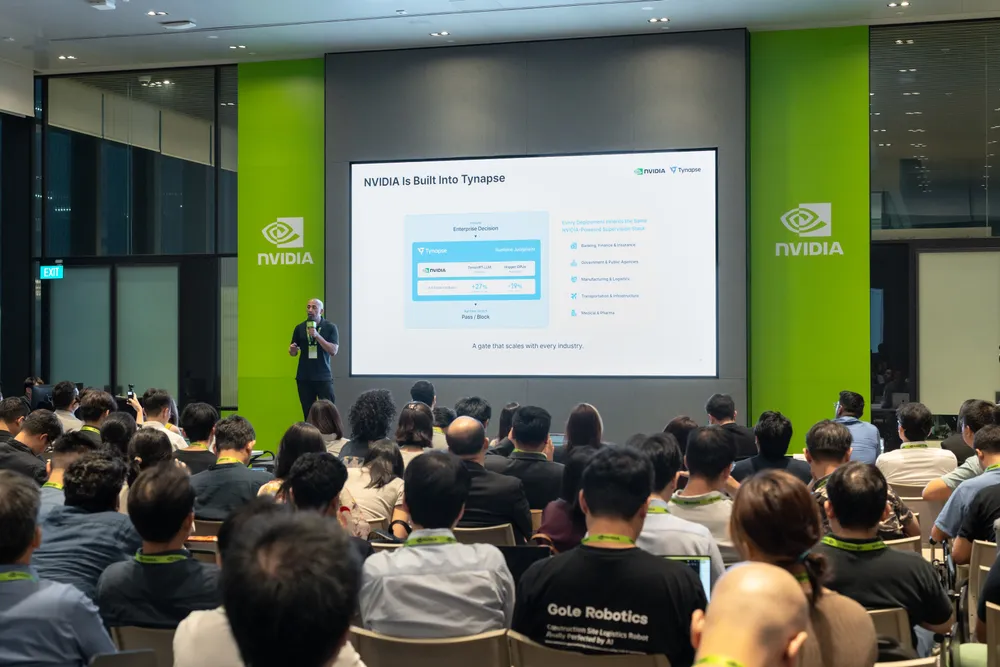
Tynapse was named a top 10 finalist at the NVIDIA Inception Grand Challenge 2026 Asia-Pacific final in Singapore—the only finalist that's just over a year old, with its AI decision-control technology already proven in the financial sector. Competing against roughly 10,000 regional startups, Tynapse presented its “decision trust infrastructure,” a verification layer built on NVIDIA Hopper GPUs, TensorRT-LLM, and FP8 inference that checks an AI agent’s reasoning against company policy and risk before it acts.
The Chosun Ilbo covered the fast-growing AI security/guardrail market. Tynapse CEO Min-seung Kang said, “Guardrail AI intentionally lowers creativity to make its judgments more consistent.” As AI grows smarter it becomes easier for it to slip out of control, the piece explains—so guardrail AI specializes purely in oversight, deliberately trading away creativity.
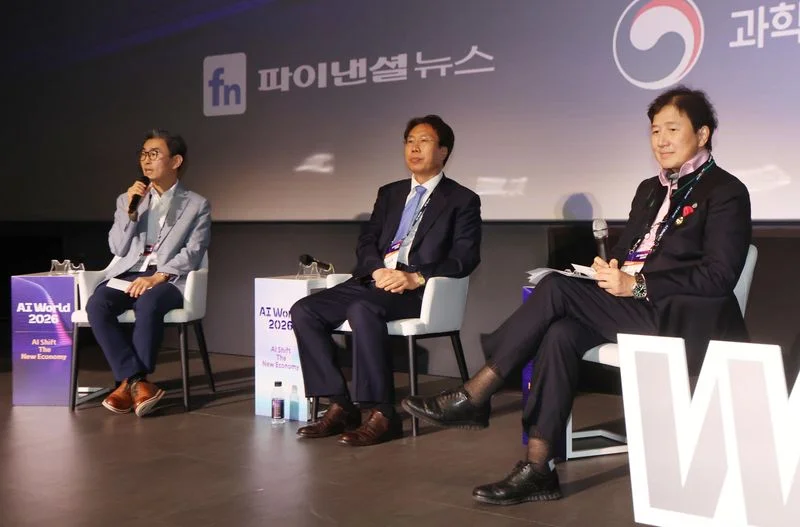
At the Governing AI session of 'AI World 2026,' co-hosted by Financial News and Korea's Ministry of Science and ICT, Tynapse Head of AI Myungsub Choi said that because AI agents can access internal information and customer databases and even send emails, the entire execution path must be verified.
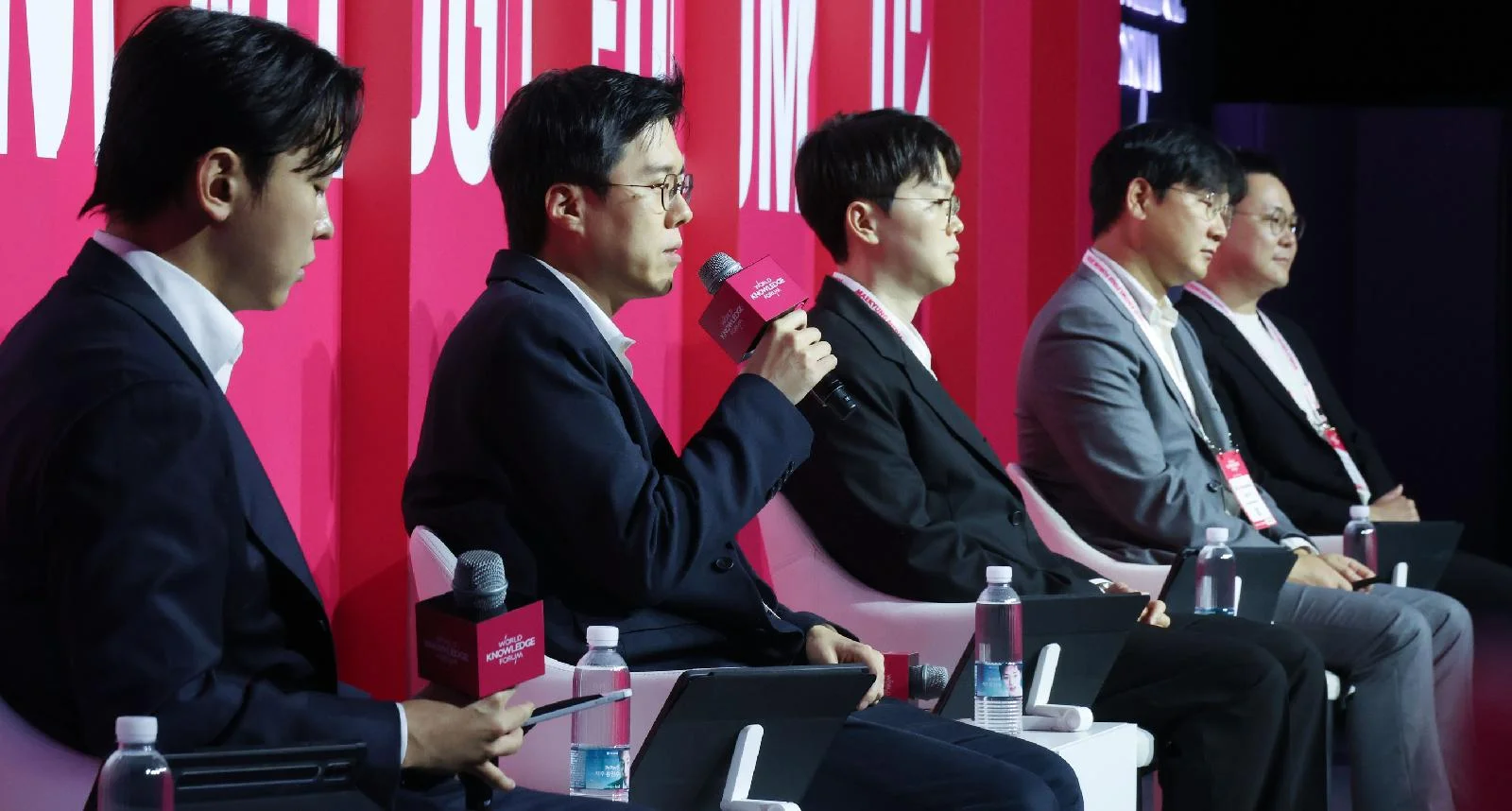
Maeil Business covered the 'K-Startups Going Global' session at the World Knowledge Forum's Korea Conference. Tynapse CEO Min-seung Kang argued that AI is rarely limited by intelligence anymore—the real challenge ahead is how much can safely be delegated to increasingly capable AI, and how to keep it under control.
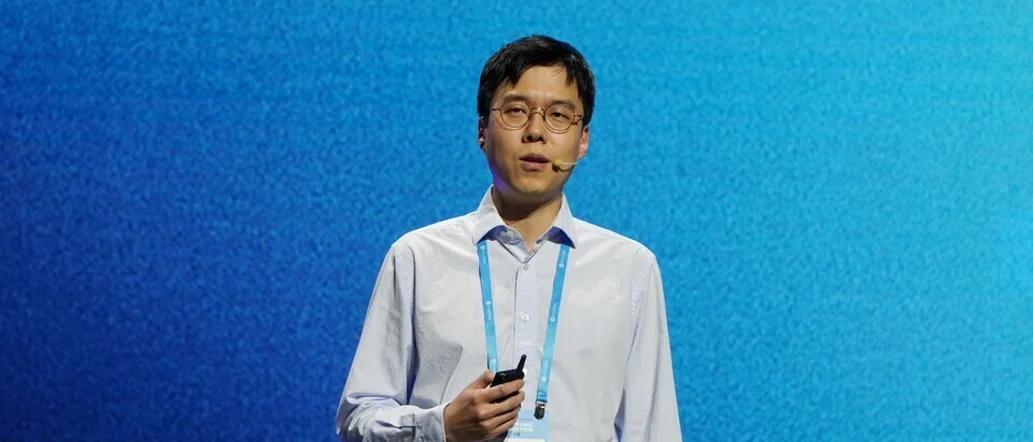
At Snowflake World Tour Seoul 2026, Tynapse CEO Min-seung Kang argued that enterprise AI competitiveness hinges not on model intelligence but on how much of the business can safely be delegated to AI. He outlined a three-tier verification framework—rules, domain-specific AI, and human review—for setting the delegation boundary.
Korea Daily profiled Tynapse ahead of Korea Conference 2026. Founded just over a year ago, Tynapse has raised ₩4.9 billion, earned the FSC Chairman’s Award through a KB Kookmin Bank partnership, and was selected as Asia’s sole entrant in the NVIDIA global startup top 6 and Snowflake Startup Challenge top 10.
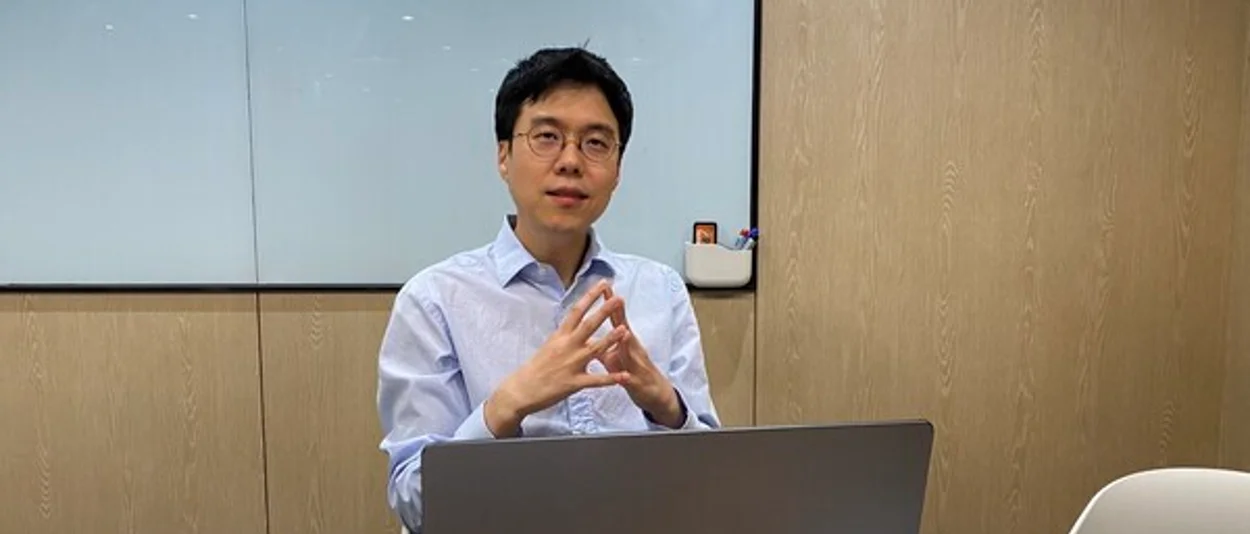
As AI agents evolve into digital employees, Tynapse CEO Min-seung Kang argues that internal control frameworks must extend beyond humans to cover AI. He explains how Tynapse handles both input and output guardrails—including catching errors in normal, non-adversarial AI responses—and why the delegation boundary, not model accuracy, is the key to enterprise AI adoption.
From team formation to enterprise validation - capital, customers and recognition.
Top prize · hosted by D.CAMP & Korea Fintech Center
Accelerate your AI roadmap with confidence. Our team works with enterprise, finance and public-sector teams to deploy the Trust Layer in weeks - not quarters.
Get in touch